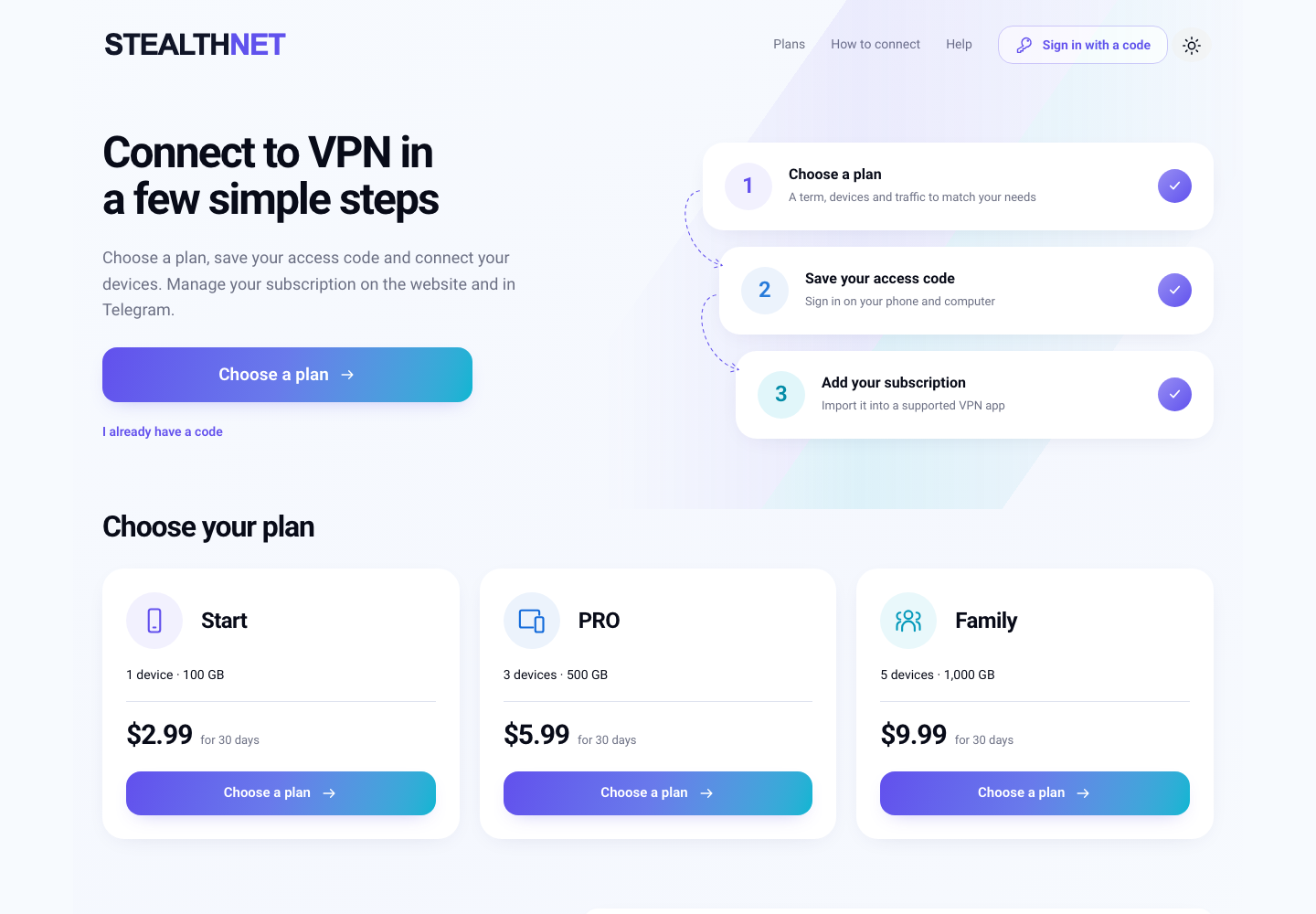
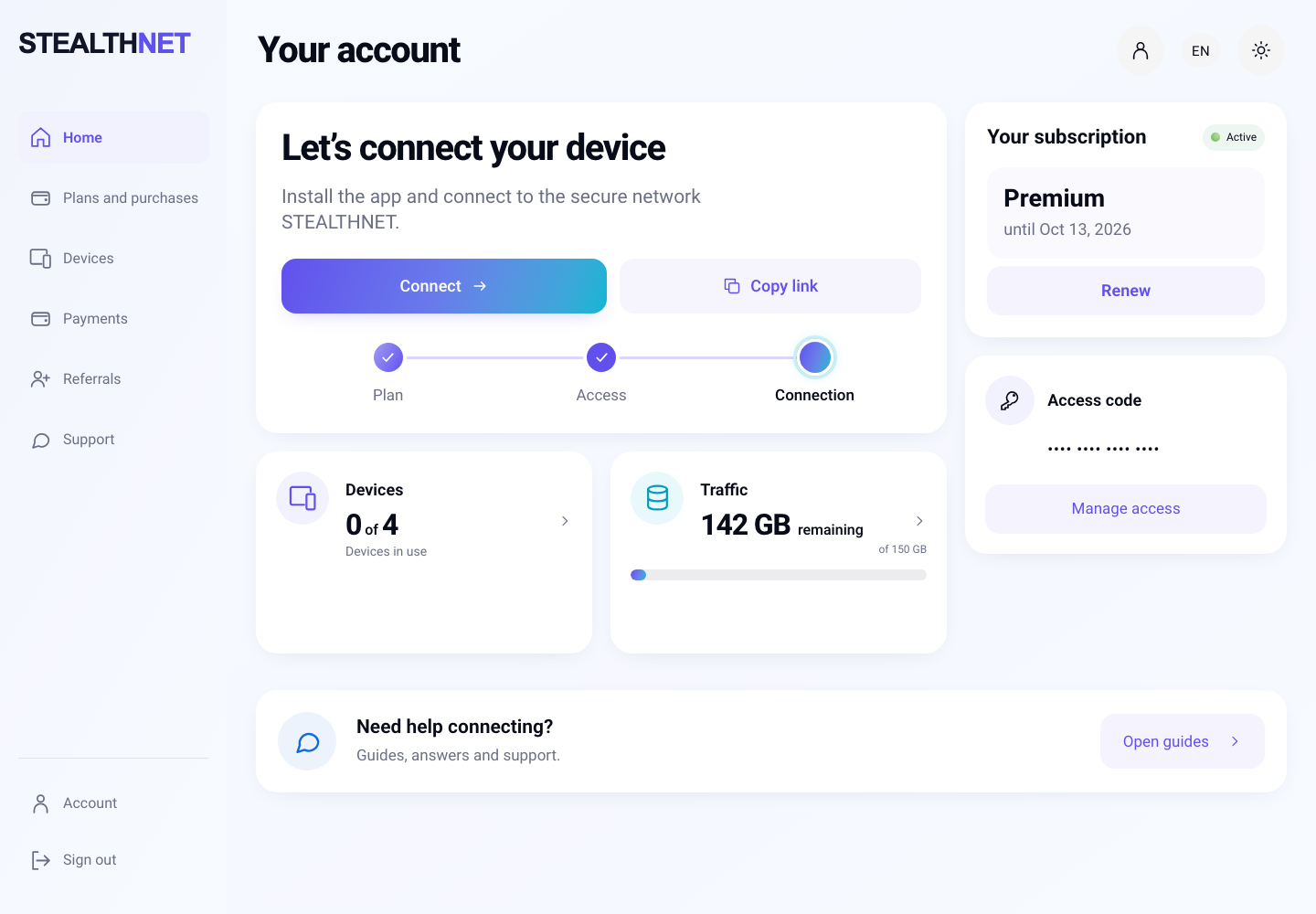
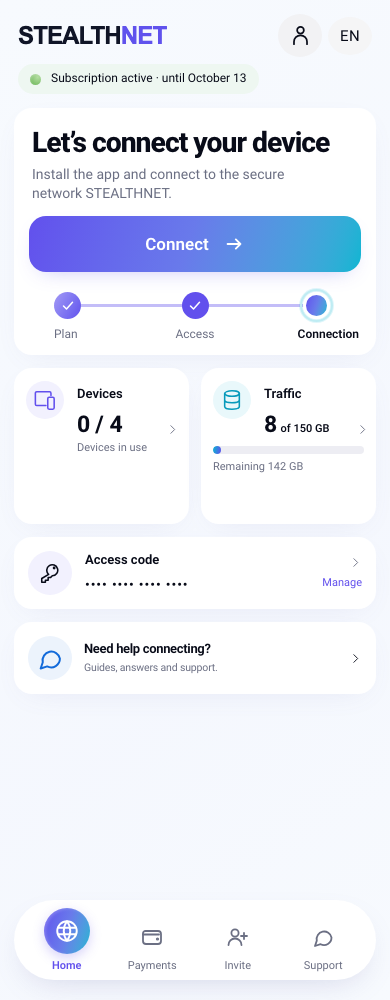
Start with a profile. Make it yours.
Choose a template or import your own JSON. Set the parameters, validate the configuration and try it on a test node.
Read the guideAn open-source control panel for your VPN project. Manage servers, subscriptions and payments. Give customers your own website and Telegram app.
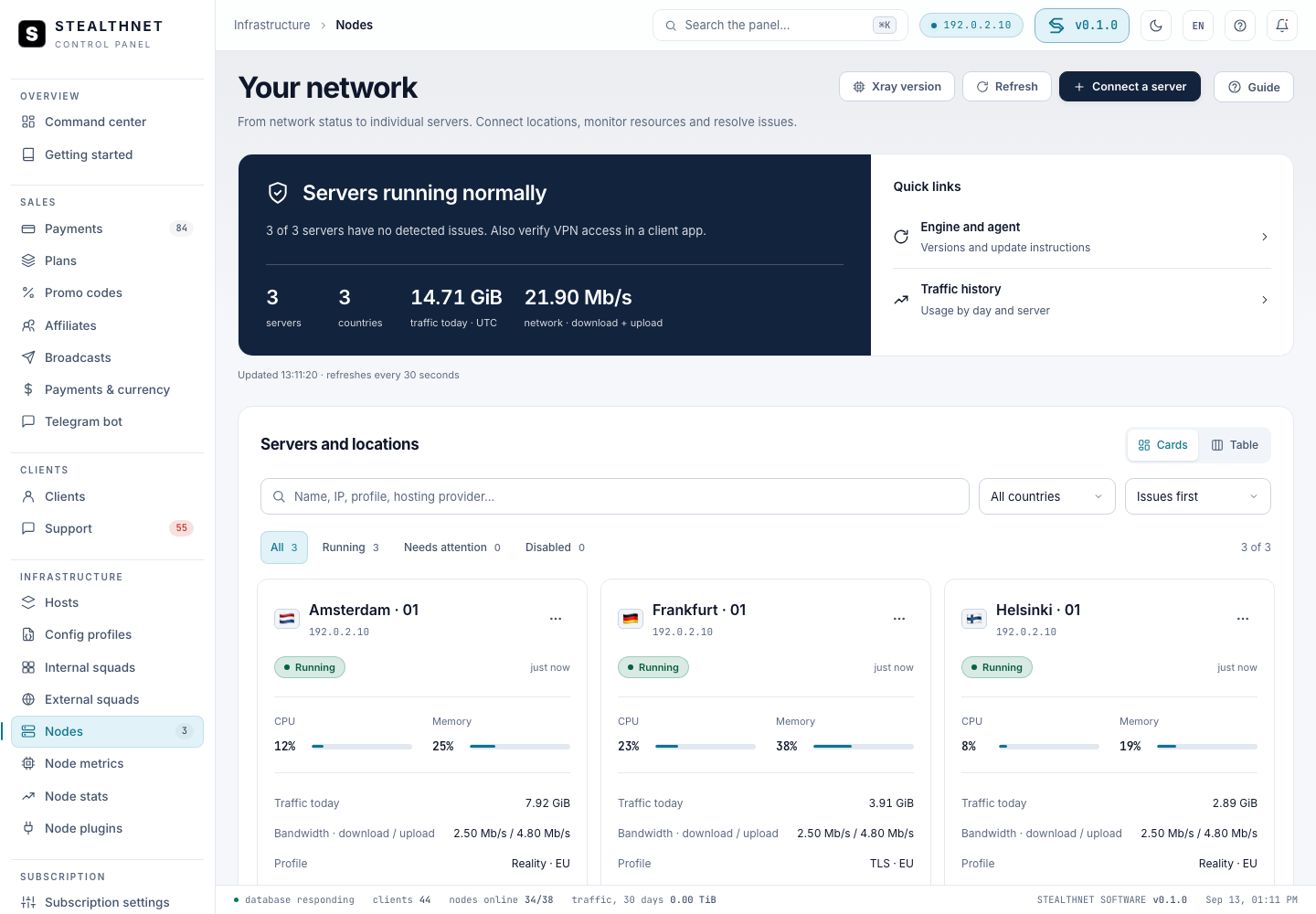
Nodes, profiles, server health and customer access in a single panel.
Real interfaces with demonstration data.Choose a template or import your own JSON. Set the parameters, validate the configuration and try it on a test node.
Read the guidePlans, traffic limits, devices, payments and referrals share the same customer record.
Read the guideInstall the customer site and Mini App, add your name, logo and plans. Host them with the panel or on a separate server.
Read the guideFrom installation to a specific setting. Complete guides in English and Russian, with categories, search, commands and verification steps.
Browse documentationConnect over SSH to a clean Debian or Ubuntu server as root. The installer downloads the latest stable release and guides you through setup.
Requirements and full installation guideapt-get update
apt-get install -y git curl ca-certificates
git clone --depth 1 https://github.com/STEALTHNET-APP/STEALTHNET-SOFTWARE.git /root/stealthnet-installer
cd /root/stealthnet-installer
bash install.shJoin the community for discussions, news and setup help. Find the code, propose improvements and follow releases on GitHub.
Optional donations support project development.
TRON · TRC20THQA9Qnx87NcHAwYrcCTBGSi6BhY72LXEZ